Updated: May 2026
What is the Cost of a Luxury Week in Larantuka?
- This price point includes private Phinisi boat charters, exclusive cultural access, and high-end private accommodations.
- Costs are subject to a 30-50% premium during the peak Semana Santa festival season in March or April.
- Bespoke, all-inclusive packages provide the best value, covering private guides, all meals, and seamless inter-island transport.
The air is thick with the scent of salt and frangipani. From the deck of the launch, the cone of Ile Mandiri volcano pierces a soft morning sky, its reflection shimmering on the impossibly clear water of the Larantuka Strait. Aboard, the only sounds are the gentle thrum of the engine and the quiet instructions of your guide as you approach a village accessible only by sea. This is the rarefied world of Eastern Flores, a corner of the Indonesian archipelago that has remained profoundly insulated from the churn of mass tourism. It’s an experience that feels less like a vacation and more like a genuine expedition into a living culture. But gaining access to this level of authenticity and seclusion comes with a specific price tag. The question isn’t just “can you visit,” but rather, what is the real cost of a luxury week in Larantuka?
Deconstructing the “All-Inclusive” Itinerary
In the lexicon of global travel, “all-inclusive” often conjures images of sprawling resorts with wristbands and buffets. In Eastern Flores, the term requires a complete redefinition. Here, it signifies a meticulously planned, privately guided journey where every logistical detail is handled discreetly in the background. According to Jean-Pierre Dubois, a Flores-based expedition leader with over two decades of experience crafting high-end Indonesian voyages, the cost is a direct reflection of the complexity. “You are not paying for a hotel room,” he explained to me over satellite phone from a remote anchorage. “You are investing in seamless logistics in a region with minimal infrastructure. This includes the vessel, a dedicated crew of 6 to 12, a private guide, a chef, all provisions, fuel, and curated land excursions.”
A typical high-end budget allocates roughly 60% of the total cost to the private vessel charter. The remaining 40% covers land-based accommodation, internal flights from a hub like Bali (DPS), private vehicle transfers, guide fees, meals, and activity permits. For instance, return flights from Denpasar to Maumere (MOF), the most reliable airport for reaching Larantuka, can range from $250 to $400 per person. A top-tier local guide, essential for navigating cultural nuances, commands a fee of $150-$200 per day. When you factor in a private air-conditioned vehicle for the 2.5-hour transfer from Maumere to Larantuka, which costs approximately $100, the baseline expenses accumulate quickly, even before considering the main components of the voyage. The value in a bespoke package from a specialist like Larantuka Lamaholot Voyages is their ability to bundle these variable costs, leveraging local relationships to ensure quality and access that would be nearly impossible for an independent traveler to replicate.
The Vessel as Your Private Villa: The Price of Maritime Exploration
The centerpiece of any luxury journey in this archipelago is the vessel. The waters separating Flores, Adonara, Solor, and Lembata are the arteries of life and the primary means of exploration. The choice of vessel dictates not only your comfort but the entire character of your trip. The most sought-after option is a traditional Phinisi schooner, a hand-built wooden sailing vessel whose boatbuilding art is recognized by UNESCO as a Masterpiece of the Oral and Intangible Heritage of Humanity. These are not rustic sailboats; modern luxury Phinisis are floating boutique hotels, complete with air-conditioned cabins, en-suite bathrooms, and professional chefs.
A week-long private charter on a high-end, 3-to-4-cabin Phinisi typically costs between $35,000 and $60,000 for the entire vessel. Divided among two or three couples, this breaks down to approximately $7,000 to $10,000 per person. This price includes a full crew, a cruise director, all meals, non-alcoholic beverages, and use of onboard equipment like paddleboards and snorkeling gear. For example, the Damai II, a vessel known for its service in the region, offers itineraries where a day’s sail might cover the 25 nautical miles from the pristine reefs of Adonara to the whaling villages of Lembata. The cost reflects the vessel’s craftsmanship, the crew-to-guest ratio (often 1:1), and the immense logistical effort of provisioning for a week in a remote area. The alternative, a modern motor yacht, might offer more speed but lacks the profound sense of place that comes with sailing on a Phinisi. The investment is in the platform that grants you unparalleled access to the 50-plus islands of the Lamaholot archipelago.
Accommodation Ashore: Privacy and Provenance
While much of your time will be spent at sea, strategic nights ashore are crucial for deeper cultural immersion. Larantuka itself does not possess an inventory of five-star international hotels. Luxury here is defined by privacy, service, and a direct connection to the environment. The premier options are a handful of privately-owned villas and boutique eco-lodges, often booked out months, if not years, in advance, especially around key festival dates. A stay at a private beachfront villa, with two or three bedrooms, a private pool, and a dedicated staff, can cost between $500 and $900 per night. These properties serve as a comfortable and exclusive base from which to explore the cultural heart of Larantuka.
One such property, which I had the privilege of visiting, is managed by a Dutch-Indonesian couple and features architecture blending local materials with European design sensibilities. The daily rate of $750 included a chef who prepared meals using ingredients sourced from the property’s organic garden and the local fish market, just 3 kilometers away. This is a far cry from a standard hotel stay. It’s a curated residential experience. For travelers seeking a more rustic but equally exclusive option, certain eco-lodges on neighboring islands offer bungalows for around $300-$400 per night. These often operate with a strong conservation ethos, contributing a percentage of their revenue to local community and reef protection projects. The limited supply of such high-caliber properties—fewer than ten in the entire region—is the primary driver of their cost.
Curated Experiences: From Ancestral Villages to Volcanic Treks
The true value of a luxury itinerary in Larantuka lies in the exclusive access it provides. This is where a significant portion of the budget is allocated to experiences that go beyond sightseeing. A standard package will include snorkeling on pristine, unnamed reefs, but a premium itinerary involves arranging for a marine biologist to join your vessel for two days, a service that costs approximately $1,000. Instead of simply visiting a village, a high-end operator can arrange a private audience with a clan elder in a traditional Lamaholot village, an experience that requires careful cultural mediation and a respectful contribution to the community, typically around $300-$500.
For the more adventurous, a privately guided sunrise trek up the 1,703-meter Ile Mandiri volcano is a highlight. This isn’t a casual hike; it requires a pre-dawn start, porters, and an experienced guide. The cost for a private party of two is around $400. Another signature experience is a visit to an ikat weaving cooperative. While many tours visit these, a luxury itinerary facilitates a one-on-one session with a master weaver, who can explain the intricate, months-long process of creating a single ceremonial textile. The cost of acquiring one of these museum-quality pieces can range from $500 to over $2,000. These are not transactions; they are investments in the preservation of a craft. As noted by the official Indonesian tourism board, these cultural interactions are central to the nation’s travel identity, and in Flores, they remain powerfully authentic.
The Semana Santa Premium: A Cost Analysis of Easter Week
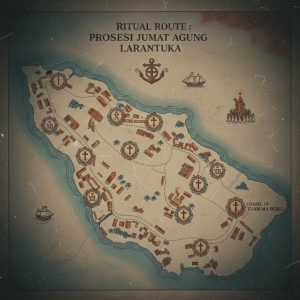
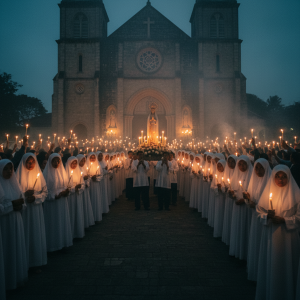
Larantuka’s global renown stems from Semana Santa, or Holy Week, a series of Easter processions with roots stretching back over 500 years to the arrival of Portuguese missionaries. This week-long event transforms the quiet port town into a major pilgrimage site, drawing thousands of devotees from across Indonesia and the world. The centerpiece is the sea procession, where a sacred 16th-century statue of Tuan Ma (the Virgin Mary) is carried on a barge across the Larantuka Strait. Experiencing this unique cultural and religious event comes at a significant premium. “During Semana Santa, demand for every single resource—boats, guides, rooms, cars—outstrips supply by a factor of at least ten,” says local operator Fredericus Kumanireng. “We see prices increase by a minimum of 30%, and for prime charters and villas, that can easily be 50% or more.”
A luxury package for two during Semana Santa week can easily climb to $18,000-$20,000. This increase covers not only the higher rates but also the added logistical complexity of navigating a town bustling with over 10,000 pilgrims. A charter vessel that costs $40,000 for a week might be priced at $60,000. A villa that normally rents for $700 a night could command $1,100. Planning for the famous Semana Santa celebrations must begin at least 12 to 18 months in advance to secure the best resources. The premium paid is for a front-row seat to one of Asia’s most profound cultural spectacles, with a guide who can provide context and navigate the crowds to offer moments of quiet observation amidst the fervent public devotion.
Quick FAQ on Larantuka Luxury Travel Costs
Is it possible to experience Larantuka on a lower budget?
Absolutely. Independent travelers can utilize local guesthouses for $30-$50 per night, eat at local warungs for a few dollars per meal, and use public ferries and buses. However, this is a fundamentally different type of travel. The luxury cost detailed here is for private, seamless, and exclusive access, which is a service- and logistics-intensive proposition in this remote region.
What is the best currency to use?
High-end tour operators, charter companies, and private villas almost always quote and transact in U.S. Dollars (USD) or Euros (EUR). However, for any local purchases, from market handicrafts to a coffee at a local shop, you will need Indonesian Rupiah (IDR). It is advisable to carry at least 3,000,000 IDR (approximately $200 USD) for incidentals during a week-long trip.
Are tips included in the overall cost?
Gratuities are generally not included in the quoted price. For a private charter crew, a tip of 5-10% of the charter fee, given to the captain for distribution at the end of the voyage, is a customary gesture for exceptional service. For private land guides, a tip of $20-$30 per day is considered generous and is greatly appreciated.
How do I get to Larantuka?
The most common gateway is flying from Denpasar, Bali (DPS) to Frans Seda Airport (MOF) in Maumere, which is a 2.5 to 3-hour drive from Larantuka. A few smaller airlines also fly directly into Larantuka’s Gewayantana Airport (LKA), but these services are less frequent and use smaller propeller aircraft. Your luxury travel planner will arrange all internal flights and private vehicle transfers.
Ultimately, the cost of a luxury week in Larantuka is a reflection of its remoteness and the extraordinary effort required to deliver a world-class experience in a place that has not bent to the demands of commercial tourism. It is a fee for passage not just to a destination, but to a different rhythm of life. Planning a bespoke journey to Larantuka, Flores, requires deep local knowledge and a network of trusted partners on the ground. The investment secures more than just comfort and privacy; it purchases a rare and unforgettable encounter with one of Indonesia’s last great cultural frontiers. Let us craft your personal voyage into the heart of Larantuka, Flores.