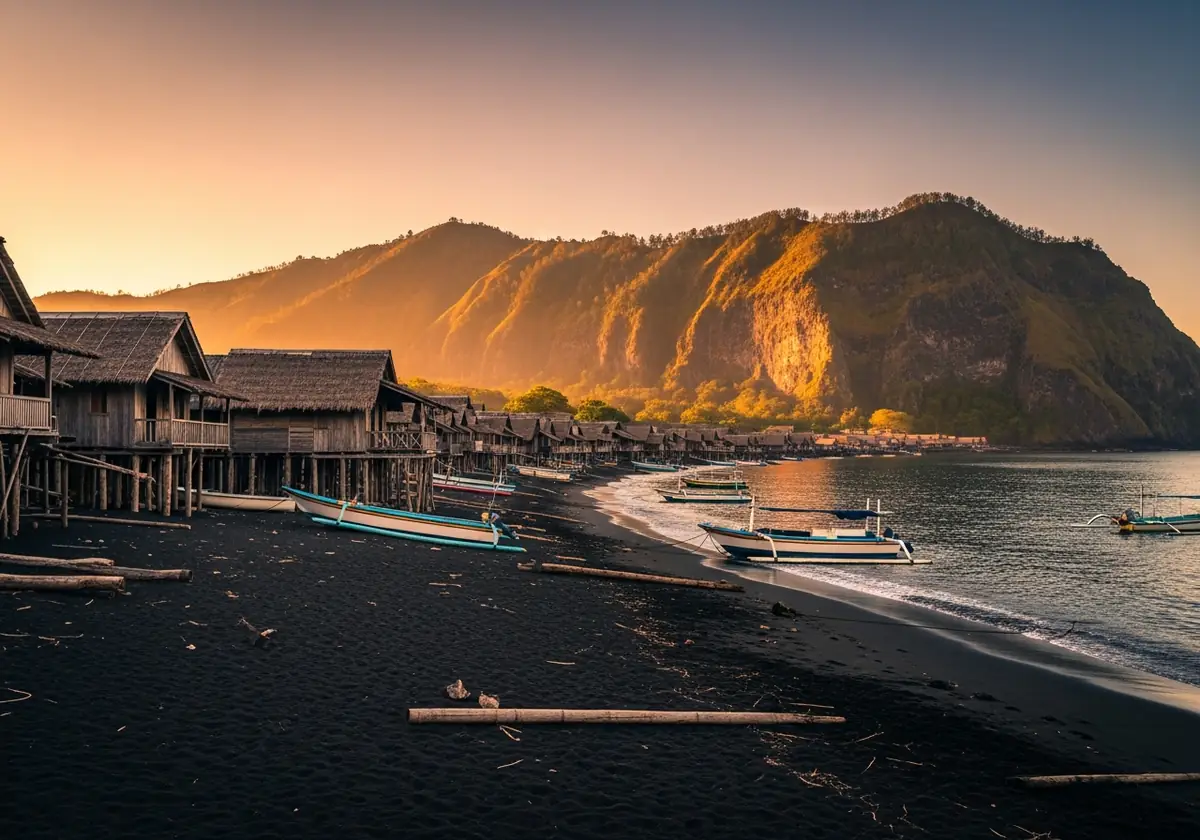
Experience the unique cultural heritage of Lamalera village on Lembata Island, East Nusa Tenggara. Discover the traditional whale hunting practices and vibrant community life with respect and understanding.
Lamalera Village Location and Geography
Lamalera village is set on the southern coast of Lembata Island in East Nusa Tenggara, Indonesia. This remote area is part of the Wulandoni District and is renowned for its striking views of the Sawu Sea. The village’s location is central to understanding its cultural practices, as it sits along the migratory route of various whale species.
Whale Hunting Tradition in Lamalera
The whale hunting tradition in Lamalera is a centuries-old practice that holds significant cultural importance for the Ata Lamalera people. This heritage is rooted in survival, with the community relying on whale meat and by-products for sustenance and trade. It is important to note that this practice is recognized by the International Whaling Commission as aboriginal subsistence whaling, emphasizing sustainability and community needs.
Traditional Whaling Tools and Methods
The hunters of Lamalera use traditional methods passed down through generations. Their primary tools include bamboo harpoons, oars, and ropes. These methods require skill and respect for the sea, highlighting a deep connection between the Ata Lamalera and their environment.
Sustainable Practices in Modern Whaling
Modern practices in Lamalera emphasize sustainability, ensuring that the whale hunting tradition does not threaten whale populations. The community adheres to strict guidelines and only hunts certain species during specific times of the year, aligning with the whales’ migratory patterns.
Lamalera People Ethnic Group and Language
The Ata Lamalera, the residents of Lamalera village, are part of the broader Lamaholot ethnic group. They speak the Lamalera language, with Lamaholot serving as the regional lingua franca. Their cultural practices, language, and traditions are integral to their identity.
Cultural Barter Market and Local Economy
Lamalera’s economy thrives on a barter system, where whale meat and other products are traded for necessities. This market system reflects the community’s reliance on each other and their environment, sustaining their way of life.
Tourism Guidelines for Respectful Cultural Visits
Visitors to Lamalera can observe the cultural heritage respectfully by adhering to local customs and guidelines. Engage with the community, attend cultural demonstrations, and understand the significance of their traditions. It’s crucial to approach these visits with an open mind and respect for local norms.
What’s Included
- Local guide services
- Visits to cultural sites
- Community interaction experiences
- Opportunities for responsible whale watching
Good to Know
- Best visiting season: June to November
- Plan accommodation months in advance during peak seasons
- Respect local customs and traditions
Lamalera vs Lamakera Whaling Communities
Lamalera and Lamakera are distinct communities, each with unique whaling traditions. While Lamalera is renowned for its cultural heritage, Lamakera’s practices are different, with both communities operating under traditional guidelines.
Lonely Planet Recognition and Travel Heritage
Lamalera has gained recognition from travel entities like Lonely Planet for its unique cultural significance. This acknowledgment underscores the importance of preserving and respecting the traditions of Lamalera and its people.
Planning for 2027
With the convergence of Holy Week on Good Friday, March 26, 2027, and the peak whale season, it is advisable to make travel arrangements well in advance to ensure availability.
Frequently Asked Questions
What is the whale hunting tradition in Lamalera village?
Lamalera’s whale hunting is a traditional practice for subsistence and cultural heritage, involving sustainable methods.
Is Lamalera the only village allowed to hunt whales in Indonesia?
Yes, Lamalera is recognized for its aboriginal subsistence whaling, adhering to specific guidelines.
How can tourists respectfully visit Lamalera village?
Tourists should respect local customs, engage positively with the community, and follow guidelines for cultural visits.
What tools do Lamalera whale hunters use?
Hunters use bamboo harpoons, oars, and ropes, emphasizing traditional and sustainable methods.
To plan your immersive cultural experience, plan your trip on WhatsApp. Experience the rich traditions of Lamalera with guidance from Larantuka Flores, operated by Komodo Luxury.
History of Aboriginal Subsistence Whaling in Lamalera
The Lamalera village on Lembata Island is renowned for its ancient tradition of aboriginal subsistence whaling. This practice, undertaken by the Ata Lamalera, is steeped in a history that predates colonial times. Located in East Nusa Tenggara, the village overlooks the Sawu Sea, which serves as a migratory route for several whale species. The practice of whaling in Lamalera is not a commercial enterprise but a means of survival and cultural preservation.
Whaling in Lamalera is regulated by the International Whaling Commission, which recognizes the unique cultural heritage of the Ata Lamalera. The community’s efforts are aimed at harvesting only what is necessary to sustain their way of life, characterized by sustainable practices passed down through generations. The primary species hunted include Sperm Whales and Pilot Whales, with a deep respect for the creatures that provide sustenance.
Lamalera’s cultural practices extend beyond whaling, as the community is deeply rooted in the Lamalera language and the Lamaholot lingua franca, which play essential roles in preserving their oral traditions and beliefs. The whale meat trade is conducted through a barter market system, reflecting the community’s cooperative approach to resources.
To explore this heritage further, consider visiting Lembata Whale Watching for a deeper understanding of the region’s cultural context.
Traditional Whaling Tools and Methods
The traditional whaling methods of Lamalera are as fascinating as they are ancient. The Ata Lamalera employ time-honored techniques using tools like bamboo harpoons, oars, and ropes. These implements are crafted with precision to ensure effectiveness and safety during the hunt. The harpoons are particularly noteworthy, crafted from bamboo and tipped with iron to pierce the thick skin of whales.
The whaling boats, known locally as “peledang,” are constructed from local wood and designed for agility and durability on the open sea. Each peledang is manned by a skilled crew, with roles passed down through familial lines. The crew’s coordination is crucial, as the hunt requires both strength and precision. The oars are integral for waters of the Sawu Sea, requiring not only physical strength but also a keen understanding of the sea’s rhythms.
| Tool | Material | Purpose |
|---|---|---|
| Bamboo Harpoon | Bamboo and Iron | Piercing whale skin |
| Oars | Wood | Navigation |
| Ropes | Natural fibers | Securing catch |
The methods employed are inherited through generations, ensuring that the cultural integrity of the practice is maintained. These sustainable practices highlight a profound respect for the ocean and its inhabitants, aligning with the community’s enduring traditions.
Preservation of Ancient Beliefs and Lifestyle
The village of Lamalera is not only a center for traditional whaling but also a bastion of ancient beliefs and lifestyle. The Ata Lamalera maintain a way of life that is intricately connected to their natural surroundings and spiritual beliefs. This includes a strong adherence to customary laws and rituals that govern community life and hunting practices.
Religious and cultural ceremonies are integral to the community, with many aspects of daily life influenced by traditional beliefs. The lifestyle in Lamalera is communal, with shared responsibilities and a deep sense of unity among its people. The barter market remains a central component of their economy, emphasizing the importance of cooperation and mutual support.
- Community Rituals: Essential for spiritual and social cohesion
- Barter Market: Reflects economic interdependence
- Language: Maintains cultural identity
Visitors interested in this rich cultural can plan to witness these practices firsthand by coordinating a trip for 2026. While there, one can also explore the vibrant traditions during the Semana Santa in Larantuka.
To ensure an enriching experience, please plan your 2027 East Flores trip on WhatsApp, offering a smooth way to connect with local expertise and cultural insights.
How to Reach Lamalera Village: A Journey to Lembata Island in 2026
Visiting Lamalera Village is a journey that requires careful planning, especially for those who wish to witness the unique cultural heritage of the Lamaholot people. Located on Lembata Island, East Nusa Tenggara, Lamalera is renowned for its traditional whale hunting practices. To reach this remote village, one must first travel to East Flores. Start your journey by flying into Maumere or Kupang, and then continuing by road to Larantuka. The road trip from Maumere to Larantuka takes approximately 3.5 to 4.5 hours, depending on road conditions.
From Larantuka, travelers can take a ferry to Lembata Island, with a crossing time of 1.5 to 2 hours. Lembata is part of the Wulandoni District, where Lamalera Village is situated. Upon arrival, local transportation such as ojek (motorbike taxi) or rented vehicles can be arranged to reach Lamalera. It is advisable to check ferry schedules in advance and plan your visit during the calmer-sea travel window from June to November, when crossings are most reliable. For those planning a trip in 2027, consider coordinating with local guides well ahead of time.
- Starting Point: Maumere or Kupang
- Travel Time to Larantuka: 3.5–4.5 hours by road
- Ferry to Lembata: 1.5–2 hours
- Best Season: June to November
For personalized travel arrangements, tourists can plan your 2027 East Flores trip on WhatsApp.
Understanding the Cultural Heritage of Lamalera: Traditional Whaling Practices
Lamalera Village holds a deep cultural significance due to its traditional whaling practices, a heritage recognized by the International Whaling Commission as aboriginal subsistence hunting. The Ata Lamalera people, who inhabit the region, engage in whaling not for commercial purposes but to sustain their community. These practices have been passed down through generations, reflecting a sustainable and respectful relationship with the marine environment.
The whale hunting season coincides with the migratory route of whales and dolphins through the Sawu Sea, with sightings of Sperm Whales, Pilot Whales, Spinner Dolphins, and Bottlenose Dolphins being common. The methods employed by the Lamalera villagers are traditional and labor-intensive. Using bamboo harpoons, oars, and ropes, small teams set out in wooden boats to engage in this age-old practice, ensuring minimal impact on marine populations.
It is crucial for visitors to understand that whaling in Lamalera is a cultural practice rather than a touristic spectacle. Observing these activities requires respect and sensitivity toward the local traditions and the ecological balance maintained by the community.
For more on the heritage and practices of the region, consider exploring related experiences such as the Semana Santa in Larantuka, another significant cultural event in East Flores.
Exploring the Local Economy and Language of Lamalera
The economy of Lamalera Village is primarily based on the barter market, where whale meat and other products obtained from the sea are exchanged with neighboring villages. This traditional trade system reflects the community’s self-sufficiency and mutual dependence with other parts of Lembata Island. While the whale meat trade remains a staple, other local goods, including agricultural products, are part of this barter system.
Understanding the local language is another aspect that enriches the visitor experience. The Lamalera language is spoken by the community, but the Lamaholot lingua franca facilitates communication between different villages across East Flores. Visitors are encouraged to learn basic phrases in Lamaholot to engage more meaningfully with the residents.
| Language | Use |
|---|---|
| Lamalera | Local communication within the village |
| Lamaholot | Lingua franca for broader regional interaction |
As you plan your visit, immerse yourself in these cultural dynamics, and enjoy a deeper connection with the Lamaholot heritage. For further insights into the cultural richness of the region, explore our guide on East Flores tours.
Begin planning your 2027 cultural exploration of East Flores by contacting us on WhatsApp.